
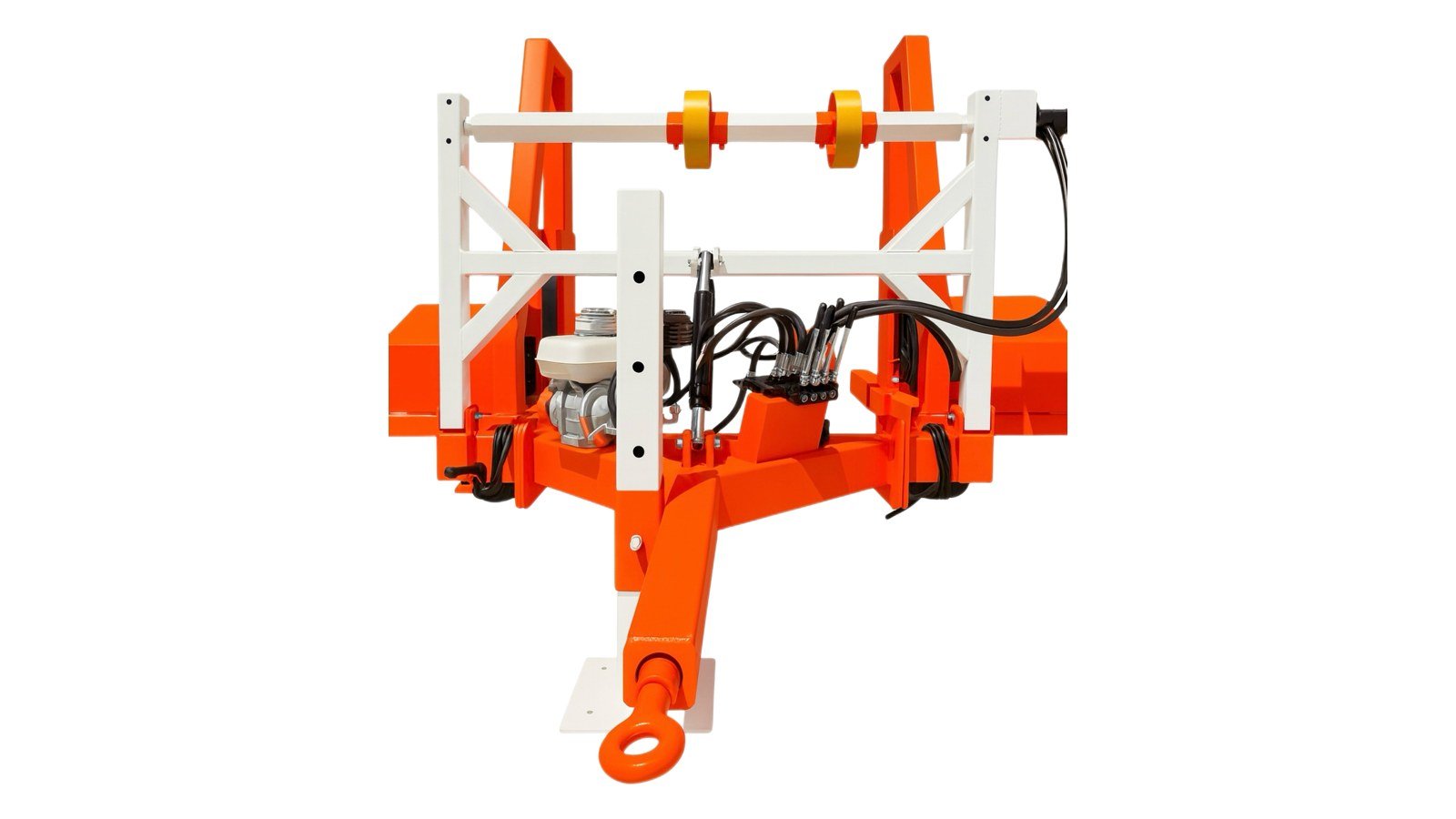
Ful Otomatik Kablo Makarası Taşıma Römorku Nedir? Motorlu Hidrolik Yükleme Sistemi Nasıl Çalışır?
“Ful otomatik römork” aranırken genellikle kastedilen, kabloyu dolu makarayla birlikte vinç veya forklift kullanmadan kaldırabilen, motorlu hidrolik yükleme sistemine sahip römork modelleridir. RMK Makine’nin 3 ile 15 ton arasındaki hidrolik kablo makarası taşıma römorkları, çift silindirli kaldırma kolları ve hidrolik güç ünitesiyle bu işlevi sahada tek başına yerine getirir. 2026 itibarıyla enerji nakil hattı ve GES projelerinde saha ekipleri, ayrı bir vinç kiralamadan yükleme yapabilen bu tip römorkları tercih ediyor.
Bir elektrik taahhüt firmasının saha şefini düşünün. Makara sahaya ulaştığında elde vinç yok, forklift de başka bir ekipte çalışıyor. İşte tam bu noktada motorlu hidrolik sistemli bir römork, makarayı kendi gücüyle kaldırıp mile oturtarak günlerce sürebilecek bir lojistik sorununu dakikalar içinde çözer.
FUL OTOMATİK RÖMORK NE ANLAMA GELİR
“Ful otomatik römork” piyasada tek bir ürün adı değildir. Kaldırma ve yükleme işlemini motorlu hidrolik sistemle kendi başına yapabilen römork grubunu tarif eden bir arama terimidir.
Bu tanımın karşısında iki farklı römork tipi bulunur. Birincisi, yalnızca kasası ve tekerleği olan, makaranın vinç veya forkliftle dışarıdan yüklenmesini gerektiren basit taşıma römorkları. İkincisi ise RMK Makine’nin ürettiği, çift hidrolik silindir ve hidrolik güç ünitesiyle makarayı kendi üzerine kaldırıp mile oturtan modeller.
Örneğin Konya çevresinde bir dağıtım hattı projesinde saha ekibi, basit bir römorkle çalıştığında her makara değişiminde ayrıca vinç çağırmak zorunda kalır. Aynı ekip motorlu hidrolik römork kullandığında kaldırma işlemini kendi operatörü, römork üzerindeki kumandayla kendisi yapar.
RMK Makine’nin hidrolik kablo makarası taşıma römorku serisi, bu anlamda “ful otomatik” aranırken karşılanmak istenen özelliği taşıyan ürün grubudur.
Burada söz konusu olan, sürücüsüz ya da sensörle kendi kendine hareket eden bir araç değildir. “Otomatik” sözcüğü sahada kullanılan diğer bir anlamıyla, kaldırma kuvvetini insan koluyla değil hidrolik motorla üretmeyi ifade eder. Bu ayrımı bilmeden sipariş veren bir satınalmacı, beklediği özelliğin ne olduğunu teknik ekibe doğru aktaramayabilir.
MOTORLU HİDROLİK YÜKLEME SİSTEMİ NASIL ÇALIŞIR
Sistem, römork üzerindeki hidrolik güç ünitesinin ürettiği basınçla çift silindirli kaldırma kollarını hareket ettirerek çalışır. Operatör kumanda üzerinden kolları makaranın iki yanına yerleştirip aynı anda kaldırır.
Çift silindir, makaranın iki flanşına eşit kuvvet uygulayarak yumuşak kaldırma ve indirme sağlar. Kaldırma kolları makara merkezine tam hizalanmazsa makara eğik kalkar ve kablo sarımı zarar görebilir.
Kilitleme ve çevirme mekanizması
Makara mile oturduktan sonra makara güvenlik kilitleme sistemi devreye girer ve yol sırasında istenmeyen hareketi önler. Makara çevirme mekanizması ise kablonun çıkış yönünü operatörün elle zorlamadan ayarlamasına yardım eder.
Bir GES santralinde kablo döşeme ekibi günde birkaç kez makara değiştirdiğinde bu motorlu sistem, her değişimde ayrı bir kaldırma ekipmanı kurmak yerine aynı römork üzerinden işlemin tekrarlanmasını sağlar.
Operatörün sistemle çalışması için ağır makine ehliyeti gerekmez, ancak kumandayı kullanmadan önce kısa bir tanıtım yeterlidir. Yeni başlayan bir operatör için en kritik adım, kaldırma kollarını makaraya yaklaştırırken kolları aynı hızda hareket ettirmektir. Kollar farklı hızda ilerlerse makara flanşlarından biri önce kalkar ve denge kaybolur.
RMK HİDROLİK RÖMORK MODELLERİNİN TEKNİK KARŞILAŞTIRMASI
RMK Makine’nin motorlu hidrolik römork serisi 3, 5, 8, 10 ve 15 ton kapasiteli beş modelden oluşur. Aşağıdaki tablo her modelin ürün sayfalarında yayımlanan teknik değerlerini karşılaştırır.
| Model | Kapasite | Yüklü Ağırlık | Makara Çap Aralığı | Yükleme Genişliği | Motorlu Hidrolik Kaldırma |
|---|---|---|---|---|---|
| RMK-KTR3T | 3.000 kg | 3.750 kg | 1.100 – 2.300 mm | 1.500 mm | Evet |
| RMK-KTR5T | 5.000 kg | 5.600 kg | 1.100 – 2.600 mm | 1.600 mm | Evet |
| RMK-KTR8T | 8.000 kg | 9.000 kg | 1.100 – 2.800 mm | 1.800 mm | Evet |
| RMK-KTR10T | 10.000 kg | 10.700 kg | 1.100 – 3.000 mm | 2.000 mm | Evet |
| RMK-KTR15T | 15.000 kg | 15.850 kg | 1.600 – 3.200 mm | 2.500 mm | Evet |
Değerler RMK Makine ürün sayfalarından alınmıştır.
Modellere göre maksimum makara çapı (mm)
Tablodaki makara çap aralığı, römorka yüklenebilecek makaranın flanş çapı sınırını gösterir. Bir proje ekibi makaranın ağırlığına göre model seçse bile çap bu aralığın dışındaysa makara römorka sığmaz.
GÜVENLİK VE KONTROL SİSTEMLERİ NE İÇERİR
Motorlu hidrolik römorklarda güvenliği sağlayan üç temel unsur makara güvenlik kilidi, el freni ve opsiyonel araç senkronize fren sistemidir.
El freni, römork sahada park edildiğinde veya kaldırma işlemi sırasında sabit kalmasını sağlar. Opsiyonel hidrolik veya pnömatik senkronize fren, çekici aracın fren sistemiyle uyumlu çalışarak yol sırasında ek güvenlik katmanı oluşturur.
Her ünite CE ve ISO belgeleriyle teslim edilir ve makine mühendisi onaylı test raporuyla birlikte gönderilir. Uyarı lambaları ve opsiyonel güneş enerjili flaşör, römorkün özellikle gece şantiye hareketlerinde görünürlüğünü artırır.
Bir saha şefi vardiya başında makarayı kaldırmadan önce hidrolik hortum ve rakorlarda sızıntı olup olmadığını, kaldırma kollarının makara merkezine hizalı durup durmadığını kontrol eder. Kilit takılmadan römork hareket ettirilmez.
HANGİ SAHA KOŞULLARINDA MOTORLU RÖMORK TERCİH EDİLİR
Vinç veya forkliftin sahaya giremediği GES santralleri, kırsal enerji hatları ve dar şantiye alanlarında motorlu hidrolik römork tercih edilir.
Kamyonun ulaşamadığı eğimli veya patika güzergahlarda RMK’nın traktör akupleli römork modeli devreye girer. Bu modelde römork bir tarım traktörüne bağlanarak sahaya kadar çekilir ve dar patikalarda da hareket edebilir.
20 Ocak 2027’den itibaren uygulanmaya başlayacak 2023/1230 sayılı AB Makine Tüzüğü, hidrolik kaldırma donanımlı römorklar için CE uyumluluğunu daha sıkı bir çerçeveye bağlayacak. Bu nedenle motorlu hidrolik römork tercih eden firmaların satın alma öncesi CE belgesinin güncel mevzuata uygunluğunu teyit etmesi önemlidir.
Örneğin Hollanda’ya ihracat yapılan bir projede alıcı firma, römorkün CE belgesini ve mühendis onaylı test raporunu teslimat öncesi talep eder. Motorlu sistemin Avrupa standartlarına uygunluğu bu belgelerle doğrulanır.
RMK Makine’nin Konya’daki üretim tesisinden Romanya ve Slovakya’ya gönderilen römorklarda da aynı kontrol süreci işler. İthalatçı firma, teslimattan önce kaldırma mekanizmasının test raporunu ve CE işaretlemesini inceler, çünkü Avrupa’da sahaya çıkan her hidrolik ekipmanın bu belgelerle birlikte bulunması zorunludur.
SATIN ALMA ÖNCESİ NELERE BAKILMALI
Satın alma öncesi üç nokta kontrol edilir. Dolu makara ağırlığı, makara çap ve genişlik ölçüleri, çekici aracın uyumu.
Dolu makara ağırlığı, boş tambur ağırlığı ile sarılı kablonun ağırlığının toplamıdır. Bu hesap yapılmadan yalnızca boş makara ağırlığına göre model seçilirse, kablo sarıldıktan sonra römork kapasitesinin üzerinde yük taşımak zorunda kalınabilir.
Bir satınalma sorumlusu, teklif istemeden önce projedeki en ağır ve en büyük çaplı makaranın ölçülerini not eder. Ardından bu ölçüleri tabloda yer alan model aralıklarıyla karşılaştırarak doğru kapasiteyi belirler.
Çekici araç tarafında ise aracın belgesinde yazan izin verilen römork kütlesi, modelin yüklü ağırlığından düşük olmamalıdır. Traktör akupleli modelde ayrıca çeki demiri ve pim çapı uyumu önceden kontrol edilmelidir.
SIK SORULAN SORULAR
Motorlu hidrolik römork ile basit taşıma römorku arasındaki fark nedir?
Basit taşıma römorkunda makara vinç veya forkliftle dışarıdan römorka yüklenir, römorkün kendi kaldırma donanımı yoktur. Motorlu hidrolik römorkta ise çift silindirli kaldırma kolları ve hidrolik güç ünitesi, makarayı yerden kaldırıp römorkün makara miline oturtur. Bu fark, vinç bulunmayan sahalarda makara değişimini saatlerden dakikalara indirir ve ayrı bir kaldırma ekipmanı kiralama ihtiyacını ortadan kaldırır.
Ful otomatik römork tabiri hangi RMK ürünlerini kapsar?
Bu tabirle genellikle aranan özellik, RMK Makine’nin 3, 5, 8, 10 ve 15 ton kapasiteli hidrolik kablo makarası taşıma römorku serisinde bulunur. Serinin tamamı çift hidrolik silindir, makara güvenlik kilidi ve makara çevirme mekanizmasıyla üretilir. Kamyonun giremediği sahalar için aynı motorlu hidrolik sistemin traktör akupleli versiyonu da sunulur. Her ünite CE ve ISO belgeleriyle teslim edilir.
Motorlu hidrolik römorkün kaldırabileceği makara ağırlığı nasıl belirlenir?
Kaldırılabilecek ağırlık, modelin kapasitesine göre değişir ve 3 ton ile 15 ton arasında kademelidir. Doğru model, boş tambur ağırlığı ile sarılı kablonun ağırlığının toplamı olan dolu makara ağırlığına göre seçilir. Bu hesap sadece boş makara ağırlığına bakılarak yapılırsa, kablo sarıldıktan sonra römork kapasitesinin üzerinde bir yükle karşı karşıya kalınabilir. Ayrıca makaranın flanş çapı modelin çap aralığında kalmalıdır.
Çekici aracın römorkla uyumu nasıl kontrol edilir?
Çekici aracın ruhsat veya belgesinde yazan izin verilen römork kütlesi, seçilen modelin yüklü ağırlığından düşük olmamalıdır. Örneğin RMK-KTR8T için yüklü ağırlık 9.000 kg, RMK-KTR15T için 15.850 kg olarak verilir. Satınalma sorumlusu bu karşılaştırmayı teklif aşamasında yapmalıdır. Traktör akupleli modelde ayrıca traktörün çeki demiri ile römorkun pim çapı uyumu sipariş öncesinde kontrol edilir, aksi halde römork sahada bağlanamaz.
Makara çapı model aralığının dışında kalırsa ne yapılmalı?
Makara çap aralığı, römorka yüklenebilecek makaranın flanş çapı sınırını gösterir ve ağırlık uygun olsa bile bu sınır aşılırsa makara römorka sığmaz. Bu durumda çap aralığı daha geniş olan bir üst model seçilir. Örneğin flanş çapı 3.000 mm’yi aşan bir makarada RMK-KTR10T (1.100 – 3.000 mm) yetmez, RMK-KTR15T (1.600 – 3.200 mm) seçilir. Makara genişliği de modelin 1.500 mm ile 2.500 mm arasında değişen yükleme genişliğiyle ayrıca karşılaştırılmalıdır.
Römork hangi belgelerle teslim edilir, AB projelerinde ne istenir?
Her ünite CE ve ISO belgeleriyle, makine mühendisi onaylı test raporuyla birlikte teslim edilir. Hollanda, Romanya ve Slovakya gibi AB ülkelerine giden projelerde ithalatçı firma, teslimattan önce kaldırma mekanizmasının test raporunu ve CE işaretlemesini inceler. 20 Ocak 2027’den itibaren uygulanacak 2023/1230 sayılı AB Makine Tüzüğü nedeniyle proje mühendisinin, satın alma öncesinde CE belgesinin güncel mevzuata uygunluğunu teyit etmesi önerilir.
Hidrolik kaldırma sistemini kullanacak operatörde hangi yeterlilik aranır?
Sistemi kullanmak için ağır makine ehliyeti gerekmez, kumandayı kullanmadan önce kısa bir tanıtım yeterlidir. Saha şefinin operatöre özellikle vurgulaması gereken nokta, kaldırma kollarını makaraya yaklaştırırken iki kolu aynı hızda hareket ettirmektir. Kollar farklı hızda ilerlerse makara flanşlarından biri önce kalkar ve denge kaybolur. Kolların makara merkezine tam hizalanmaması da makaranın eğik kalkmasına ve kablo sarımının zarar görmesine yol açabilir.
Vardiya başında ve yol öncesinde hangi güvenlik kontrolleri yapılır?
Saha şefi makarayı kaldırmadan önce hidrolik hortum ve rakorlarda sızıntı olup olmadığını, kaldırma kollarının makara merkezine hizalı durup durmadığını kontrol eder. Kaldırma sırasında el freni çekili olmalı, römork sabit kalmalıdır. Makara mile oturduktan sonra makara güvenlik kilidi takılmadan römork hareket ettirilmez. Yol güvenliği için opsiyonel hidrolik veya pnömatik senkronize fren ile gece şantiye hareketlerinde görünürlüğü artıran uyarı lambaları ve opsiyonel güneş enerjili flaşör kullanılabilir.
Motorlu hidrolik yükleme sistemi, doğru tonaj ve çap seçimiyle birleştiğinde saha ekiplerinin vinç veya forklift beklemeden makara değişimi yapmasını sağlar ve projelerin lojistik süresini kısaltır, bu nedenle “ful otomatik römork” ararken aslında aranan şey genellikle çift hidrolik silindirli, motorlu kaldırma donanımına sahip bir kablo makarası taşıma römorküdür.
RMK MAKİNE
Profesyonel Kablo Döşeme Ekipmanları
📞 WhatsApp / Telefon: (+90) 501 570 7383
✉️ E-posta: info@rmkmakine.com
🌐 Web Sitesi: www.rmkmakine.com
📸 Instagram: @rmk.makine
📘 Facebook: RMK Makine
[ENGLISH]
WHAT IS A FULLY AUTOMATIC CABLE DRUM TRANSPORT TRAILER? HOW DOES THE MOTORIZED HYDRAULIC LOADING SYSTEM WORK?
When searching for a “fully automatic trailer,” what is usually meant are trailer models with a motorized hydraulic loading system that can lift the cable along with the full drum without using a crane or forklift. RMK Makine’s hydraulic cable drum transport trailers, ranging from 3 to 15 tons, perform this function on site on their own with dual hydraulic lifting arms and a hydraulic power unit. As of 2026, field teams on power transmission line and solar power plant (GES) projects prefer this type of trailer, which can load without hiring a separate crane.
Consider the site supervisor of an electrical contracting company. When the drum arrives on site, there is no crane at hand, and the forklift is working with another team. This is exactly where a trailer with a motorized hydraulic system lifts the drum under its own power and seats it on the shaft, solving a logistics problem that could take days in a matter of minutes.
WHAT DOES A FULLY AUTOMATIC TRAILER MEAN
“Fully automatic trailer” is not a single product name on the market. It is a search term describing the group of trailers that can perform the lifting and loading operation on their own with a motorized hydraulic system.
There are two different trailer types against this definition. The first is simple transport trailers that have only a chassis and wheels, requiring the drum to be loaded externally with a crane or forklift. The second is the models manufactured by RMK Makine, which lift the drum onto itself and seat it on the shaft with a dual hydraulic cylinder and a hydraulic power unit.
For example, on a distribution line project around Konya, when the field team works with a simple trailer, they have to call a crane separately for every drum change. When the same team uses a motorized hydraulic trailer, the lifting operation is performed by their own operator, using the control panel on the trailer.
RMK Makine’s hydraulic cable drum transport trailer series is, in this sense, the product group that carries the feature sought when searching for “fully automatic.”
What is meant here is not a driverless vehicle or one that moves on its own via sensors. The word “automatic” refers, in another sense used on site, to producing the lifting force with a hydraulic motor rather than a human arm. A purchasing officer who places an order without knowing this distinction may not be able to correctly convey to the technical team what feature they expect.
HOW DOES THE MOTORIZED HYDRAULIC LOADING SYSTEM WORK
The system works by moving the dual-cylinder lifting arms with the pressure produced by the hydraulic power unit on the trailer. The operator positions the arms on both sides of the drum via the control panel and lifts them at the same time.
The dual cylinder applies equal force to both flanges of the drum, providing smooth lifting and lowering. If the lifting arms are not fully aligned with the drum center, the drum rises at an angle and the cable winding may be damaged.
Locking and rotation mechanism
Once the drum is seated on the shaft, the drum safety locking system engages and prevents unwanted movement while on the road. The drum rotation mechanism helps the operator adjust the cable exit direction without manual force.
When a cable laying team at a solar power plant (GES) changes drums several times a day, this motorized system allows the operation to be repeated on the same trailer each time, instead of setting up separate lifting equipment for every change.
A heavy machinery license is not required for the operator to work with the system, but a short introduction is sufficient before using the control panel. For a new operator, the most critical step is moving the lifting arms at the same speed as they approach the drum. If the arms move at different speeds, one of the drum flanges lifts first and balance is lost.
TECHNICAL COMPARISON OF RMK HYDRAULIC TRAILER MODELS
RMK Makine’s motorized hydraulic trailer series consists of five models with capacities of 3, 5, 8, 10 and 15 tons. The table below compares the technical values published on each model’s product page.
| Model | Capacity | Loaded Weight | Drum Diameter Range | Loading Width | Motorized Hydraulic Lifting |
|---|---|---|---|---|---|
| RMK-KTR3T | 3,000 kg | 3,750 kg | 1,100 – 2,300 mm | 1,500 mm | Yes |
| RMK-KTR5T | 5,000 kg | 5,600 kg | 1,100 – 2,600 mm | 1,600 mm | Yes |
| RMK-KTR8T | 8,000 kg | 9,000 kg | 1,100 – 2,800 mm | 1,800 mm | Yes |
| RMK-KTR10T | 10,000 kg | 10,700 kg | 1,100 – 3,000 mm | 2,000 mm | Yes |
| RMK-KTR15T | 15,000 kg | 15,850 kg | 1,600 – 3,200 mm | 2,500 mm | Yes |
Values are taken from RMK Makine product pages.
Maximum drum diameter by model (mm)
The drum diameter range in the table shows the flange diameter limit of the drum that can be loaded onto the trailer. Even if a project team selects a model based on the weight of the drum, if the diameter is outside this range, the drum will not fit on the trailer.
WHAT DO THE SAFETY AND CONTROL SYSTEMS INCLUDE
The three basic elements that provide safety in motorized hydraulic trailers are the drum safety lock, the handbrake and the optional vehicle synchronized braking system.
The handbrake keeps the trailer stationary when parked on site or during the lifting operation. The optional hydraulic or pneumatic synchronized brake works in harmony with the towing vehicle’s braking system, forming an additional safety layer while on the road.
Each unit is delivered with CE and ISO certificates and shipped together with a test report approved by a mechanical engineer. Warning lights and an optional solar powered beacon increase the trailer’s visibility, especially during nighttime site movements.
Before lifting the drum at the start of a shift, a site supervisor checks whether there is any leakage in the hydraulic hoses and fittings, and whether the lifting arms are aligned with the drum center. The trailer is not moved until the lock is engaged.
IN WHICH SITE CONDITIONS IS A MOTORIZED TRAILER PREFERRED
A motorized hydraulic trailer is preferred at solar power plants (GES), rural power lines and narrow construction sites that a crane or forklift cannot enter.
On sloped or dirt-track routes that a truck cannot reach, RMK’s tractor coupled trailer model comes into play. In this model, the trailer is attached to an agricultural tractor and towed to the site, and can also move on narrow tracks.
The EU Machinery Regulation 2023/1230, which will come into application as of January 20, 2027, will tie CE compliance for trailers with hydraulic lifting equipment to a stricter framework. For this reason, it is important for companies choosing a motorized hydraulic trailer to confirm before purchasing that the CE certificate complies with current regulations.
For example, on a project exported to the Netherlands, the buying company requests the trailer’s CE certificate and engineer approved test report before delivery. The motorized system’s compliance with European standards is verified through these documents.
The same inspection process applies to trailers shipped from RMK Makine’s production facility in Konya to Romania and Slovakia. The importing company reviews the test report of the lifting mechanism and the CE marking before delivery, because every piece of hydraulic equipment put into service in Europe is required to be accompanied by these documents.
WHAT TO CHECK BEFORE PURCHASING
Three points are checked before purchasing. The weight of the full drum, the drum diameter and width dimensions, and the compatibility of the towing vehicle.
The full drum weight is the total of the empty drum weight and the weight of the wound cable. If a model is selected based only on the empty drum weight without this calculation, the trailer may end up having to carry a load above its capacity once the cable is wound.
Before requesting a quote, a purchasing officer notes the dimensions of the heaviest and largest diameter drum in the project. These dimensions are then compared with the model ranges in the table to determine the correct capacity.
On the towing vehicle side, the permitted trailer mass stated in the vehicle’s documentation must not be lower than the model’s loaded weight. For the tractor coupled model, the compatibility of the drawbar and pin diameter must also be checked in advance.
FREQUENTLY ASKED QUESTIONS
What is the difference between a motorized hydraulic trailer and a simple transport trailer?
In a simple transport trailer, the cable drum is loaded onto the trailer from outside using a crane or forklift, since the trailer has no lifting equipment of its own. In a motorized hydraulic trailer, however, dual hydraulic lifting arms and a hydraulic power unit lift the drum off the ground and seat it onto the trailer’s drum shaft. This difference reduces drum changeovers from hours to minutes on sites without a crane and eliminates the need to rent separate lifting equipment.
Which RMK products does the term “fully automatic trailer” cover?
This feature, which is generally what buyers are looking for, is found in RMK Makine’s hydraulic cable drum trailer series with capacities of 3, 5, 8, 10 and 15 tons. The entire series is manufactured with dual hydraulic cylinders, a drum safety lock and a drum rotation mechanism. For sites that trucks cannot access, a tractor-coupled version of the same motorized hydraulic system is also offered. Every unit is delivered with CE and ISO certification.
How is the drum weight that a motorized hydraulic trailer can lift determined?
The liftable weight varies by model capacity and is staged between 3 tons and 15 tons. The correct model is selected based on the loaded drum weight, which is the sum of the empty drum weight and the weight of the wound cable. If this calculation is made by looking only at the empty drum weight, the trailer may end up facing a load above its capacity once the cable is wound on. In addition, the drum’s flange diameter must remain within the model’s diameter range.
How is the compatibility between the towing vehicle and the trailer checked?
The permitted towed mass stated on the towing vehicle’s registration or documentation must not be lower than the loaded weight of the selected model. For example, the loaded weight is given as 9,000 kg for the RMK-KTR8T and 15,850 kg for the RMK-KTR15T. The purchasing officer should make this comparison at the quotation stage. For the tractor-coupled model, the compatibility between the tractor’s drawbar and the trailer’s pin diameter must also be checked before ordering, otherwise the trailer cannot be hitched on site.
What should be done if the drum diameter falls outside the model’s range?
The drum diameter range indicates the flange diameter limit of the drum that can be loaded onto the trailer, and even if the weight is suitable, the drum will not fit on the trailer if this limit is exceeded. In this case, a higher model with a wider diameter range is selected. For example, for a drum with a flange diameter exceeding 3,000 mm, the RMK-KTR10T (1,100 to 3,000 mm) is not sufficient, so the RMK-KTR15T (1,600 to 3,200 mm) is selected. The drum width must also be separately compared against the model’s loading width, which ranges from 1,500 mm to 2,500 mm.
Which documents does the trailer come with, and what is required for EU projects?
Every unit is delivered with CE and ISO certification, along with a test report approved by a mechanical engineer. On projects heading to EU countries such as the Netherlands, Romania and Slovakia, the importing company reviews the test report of the lifting mechanism and the CE marking before delivery. Due to EU Machinery Regulation 2023/1230, which takes effect from January 20, 2027, the project engineer is advised to confirm before purchase that the CE certificate complies with the current regulations.
What qualification is required for an operator who will use the hydraulic lifting system?
No heavy machinery license is required to use the system, a brief orientation before using the control is sufficient. The point the site supervisor should particularly emphasize to the operator is moving both lifting arms at the same speed as they approach the drum. If the arms move at different speeds, one of the drum flanges lifts first and balance is lost. Failure to align the arms exactly with the drum’s center can also cause the drum to lift at an angle and damage the cable winding.
What safety checks are carried out at the start of a shift and before travel?
Before lifting the drum, the site supervisor checks whether there is any leakage in the hydraulic hoses and fittings, and whether the lifting arms are aligned with the drum’s center. During lifting, the handbrake must be engaged and the trailer must remain stationary. Once the drum is seated on the shaft, the trailer must not be moved until the drum safety lock is engaged. For road safety, an optional hydraulic or pneumatic synchronized brake can be used, along with warning lamps that improve visibility during nighttime site movements and an optional solar powered flasher.
When combined with the correct tonnage and diameter selection, the motorized hydraulic loading system allows site crews to change drums without waiting for a crane or forklift and shortens the logistics time of projects, which is why when searching for a “fully automatic trailer,” what is actually being sought is generally a cable drum trailer with dual hydraulic cylinders and motorized lifting equipment.
CONTACT RMK MAKİNE
Professional Cable Laying Equipment
📞 WhatsApp / Phone: (+90) 501 570 7383
✉️ E-mail: info@rmkmakine.com
🌐 Website: www.rmkmakine.com
📸 Instagram: @rmk.makine
📘 Facebook: RMK Makine

 İletişim Bilgileri (7/24 Hizmet):