
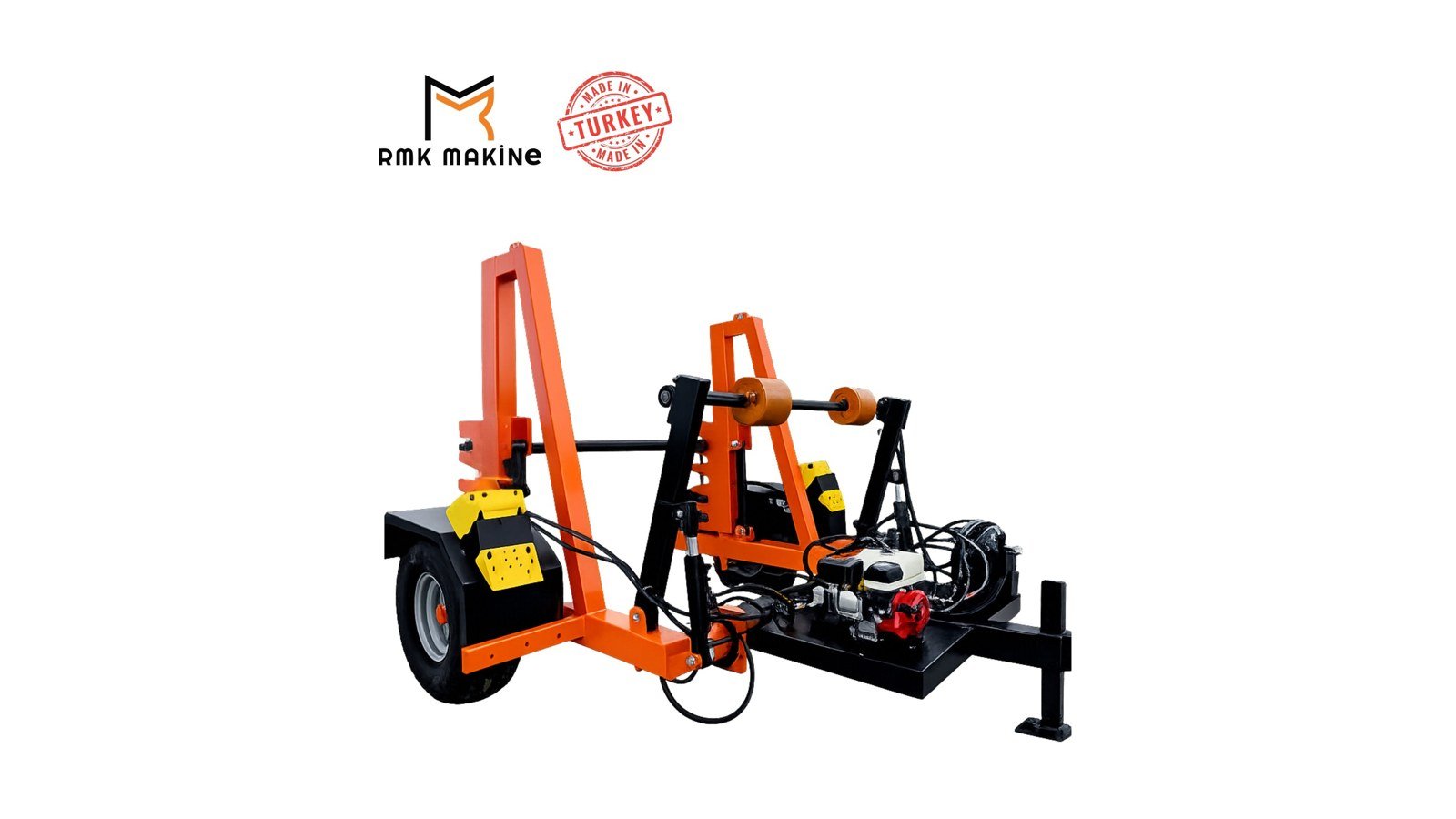
Kablo Makarası Taşıma Römorkunda Tonaj ve Hidrolik Kaldırma Nasıl Seçilir?
Kablo makarası taşıma römorkunda doğru seçim, römorkün tonaj kapasitesinin kablonun dolu makara ağırlığını karşılamasına ve hidrolik kaldırma kollarının saha koşullarına uygun olmasına bağlıdır. RMK Makine’nin ürün gamında 3, 5, 8, 10 ve 15 ton kapasiteli modeller bulunur. 20 Ocak 2027’den itibaren uygulanmaya başlayacak 2023/1230 sayılı AB Makine Tüzüğü, 2006/42/EC sayılı Makine Direktifi’nin yerini alarak hidrolik kaldırma donanımlı römorklar için CE uyumluluğunu daha sıkı bir çerçeveye bağlayacak.
RÖMORK TONAJI NASIL DOĞRU SEÇİLİR
Tonaj seçimi, kablo makarasının dolu ağırlığına göre yapılır, boş makara ağırlığına göre değil. Bu fark saha ekiplerinin en sık düştüğü hesap hatasıdır.
Örneğin bir proje ekibi, 5 tonluk boş makara ağırlığını referans alıp 5 ton kapasiteli bir römork seçerse, kablo sarıldıktan sonra toplam ağırlık 7-8 tona ulaşabilir. Bu durumda römork, kapasitesinin üzerinde yük taşımak zorunda kalır ve hidrolik sistem üzerindeki yük de orantısız artar.
RMK Makine’nin 3 ile 15 ton arasındaki kapasite seçeneklerinde doğru model, güzergahta taşınacak en büyük dolu makaranın ağırlığına göre belirlenir; proje başında bu hesap yapılmazsa saha lojistiği sonradan değişir ve ek maliyete yol açar.
Dolu makara ağırlığı nasıl hesaplanır
Dolu makara ağırlığı, boş tambur ağırlığı ile sarılı kablonun ağırlığının toplamıdır. Kablo ağırlığı, üreticinin veri sayfasındaki birim ağırlığın (kg/km) makaradaki metrajla çarpılmasıyla bulunur; boş tambur ağırlığı genellikle flanş etiketinde yazar. Hesap, projedeki en ağır kesit ve en uzun metraj için yapılmalıdır. Sonuç römork kapasitesine çok yakınsa bir üst model seçilmelidir; sınırda çalışan römork bozuk zeminde dinamik darbelere pay bırakmaz.
Makara çapı ve genişliği de tonaj kadar belirleyici
Makaranın flanş çapı römorkün makara çap aralığına, genişliği de yükleme genişliğine sığmalıdır. Ağırlık olarak 3 ton modele uyan ancak çapı 2.300 mm’yi aşan bir makara bu modele yüklenemez. Sipariş öncesinde çap, genişlik ve göbek deliği ölçüleri birlikte not edilmelidir.
RÖMORK MODELLERİNİN TEKNİK KARŞILAŞTIRMASI
Aşağıdaki tablo, RMK römork modellerini ürün sayfalarında yayımlanan değerlerle yan yana koyar. Önce kapasite, ardından çap aralığı ve yükleme genişliği karşılaştırılmalıdır.
| Model | Kapasite | Yüklü ağırlık | Makara çap aralığı | Yükleme genişliği | Makara mili çapı | Uzunluk x Genişlik x Yükseklik | Maks. çekme hızı |
|---|---|---|---|---|---|---|---|
| RMK-KTR3T | 3.000 kg | 3.750 kg | 1.100 – 2.300 mm | 1.500 mm | 80 mm | 2.700 x 2.300 x 1.700 mm | 80 km/h |
| RMK-KTR5T | 5.000 kg | 5.600 kg | 1.100 – 2.600 mm | 1.600 mm | 80 mm | 3.100 x 2.500 x 1.800 mm | 80 km/h |
| RMK-KTR8T | 8.000 kg | 9.000 kg | 1.100 – 2.800 mm | 1.800 mm | 80 mm | 3.300 x 2.800 x 1.800 mm | 80 km/h |
| RMK-KTR10T | 10.000 kg | 10.700 kg | 1.100 – 3.000 mm | 2.000 mm | 80 mm | 3.600 x 3.200 x 1.800 mm | |
| RMK-KTR15T | 15.000 kg | 15.850 kg | 1.600 – 3.200 mm | 2.500 mm | 80 mm | 4.900 x 3.500 x 2.200 mm | 80 km/h |
Değerler RMK Makine ürün sayfalarından alınmıştır.
Römork modellerine göre yüklü ağırlık (kg)
Yüklü ağırlık, römork kapasitesine kadar yüklendiğinde ulaşılan toplam kütledir; çekici seçiminde esas alınacak değer budur. Tüm modellerde makara mili 80 mm olduğundan makara göbek deliğinin bu mile uyduğu doğrulanmalıdır. Ürün sayfalarına göre istenilen makara çapı ve kapasiteye göre özel üretim de yapılabilmektedir.
HİDROLİK KALDIRMA MEKANİZMASI NASIL ÇALIŞIR
Hidrolik kaldırma kolları, kablo makarasını yerden kaldırıp römorkün makara miline oturtarak vinç veya forklift olmadan yükleme yapılmasını sağlar. Sistem, römork üzerindeki hidrolik ünitenin ürettiği basınçla çalışır.
Bir GES sahasında vinç bulunmuyorsa, ekip hidrolik kollarını makaranın iki yanına yerleştirip aynı anda kaldırarak makarayı mile hizalar. Bu işlem, saha ekibinin ayrıca ağır vinç kiralamasının önüne geçer ve kablo döşeme süresini kısaltır.
Kaldırma kollarının makara merkezine tam hizalı olması, kaldırma sırasında makaranın eğik kalkmasını ve kablo sarımının zarar görmesini önler.
Çift silindir, kilitleme ve çevirme mekanizması
RMK römorklarında kaldırma çift hidrolik silindir ile yapılır; iki silindir makaranın iki flanşına eşit kuvvet uygulayarak yumuşak kaldırma ve indirme sağlar. Standart makara güvenlik kilitleme sistemi yol sırasında istenmeyen hareketi engeller, makara çevirme mekanizması ise kablo çıkış yönünün doğru konumlandırılmasına yardım eder. Her vardiya öncesinde hortum ve rakorlarda sızıntı, silindir milinde çizik ve yağ seviyesi kontrol edilmeli; kaldırılan makara kilitlenmeden römork hareket ettirilmemelidir.
Römork mü, ayrı kaldırma ekipmanı mı?
Makara yalnız depo ile döşeme noktası arasında taşınacaksa römork yeterlidir. Makara sahada uzun süre bekleyecek ve kablo yerinde açılacaksa, römorku serbest bırakmak için ayrı bir hidrolik makara kaldırma ekipmanı kullanılabilir:
| Ekipman | Kapasite | Makara çap aralığı | Mil çapı | Mil uzunluğu | Kaldırma yüksekliği | Ağırlık |
|---|---|---|---|---|---|---|
| RMK-HKE3T | 3.000 kg | 600 – 2.000 mm | 60 mm | 1.500 mm | 400 mm | 135 kg |
| RMK-HKE5T | 5.000 kg | 900 – 2.200 mm | 70 mm | 1.650 mm | 500 mm | 240 kg |
| RMK-HKE10T | 10.000 kg | 1.100 – 3.400 mm | 85 mm | 2.000 mm | 500 mm | 290 kg |
| RMK-HKE15T | 15.000 kg | 1.200 – 3.800 mm | 100 mm | 2.200 mm | 2.400 mm | 310 kg |
Değerler RMK Makine ürün sayfalarından alınmıştır.
Kaldırma ekipmanının mil uzunluğu makara genişliğinden büyük olmalıdır; aksi halde mil iki ayağa birden oturmaz.
TRAKTÖR AKUPLELİ MODELDE ÇEKİCİ UYUMU NASIL KONTROL EDİLİR
Traktör akupleli modelde çekici uyumu, traktörün çekme gücünün römorkün dolu ağırlığını karşılamasına ve akuple bağlantı tipinin traktörün çeki demirine uymasına bakılarak kontrol edilir.
Kamyonun giremediği kırsal arazide veya eğimli GES sahalarında, ekipler traktör akupleli römork modelini tercih eder; römork, tarım traktörüne bağlanarak sahaya kadar çekilir ve dar patikalarda da hareket edebilir.
Akuple bağlantısı önceden kontrol edilmezse, saha ekibi römorkü traktöre bağlayamadığı için malzeme sahaya ulaşmadan günler kaybedebilir.
Çekici aracında kontrol edilecek noktalar
- Kütle: Çekicinin belgesinde yazan izin verilen römork kütlesi, modelin yüklü ağırlığından düşük olmamalıdır (8 ton modelde 9.000 kg).
- Bağlantı: Çeki gözü ile çeki demiri arasında pim çapı ve yükseklik uyumu kontrol edilmeli, bağlı römorkün şasisi yere paralel durmalıdır.
- Fren hattı: Opsiyonel araç senkronize fren hidrolik veya pnömatik sunulur; çekicideki fren çıkışına uygun olan seçilmelidir.
- Tekerlek yapısı: Traktör akupleli seride 3, 5 ve 8 ton modeller tek tekerlekli, 10 ve 15 ton modeller çift tekerleklidir.
Ürün sayfalarında maksimum çekme hızı 80 km/h olarak verilir; arazi güzergahlarında hız bunun çok altında tutulmalıdır.
RÖMORKLE SAHA TAŞIMASINDA EN SIK YAPILAN HATALAR
Saha taşımasında en sık yapılan hata, hidrolik kolların makara gövdesinin merkezine değil kenarına denk getirilerek dengesiz kaldırma yapılmasıdır.
Konya çevresindeki bir enerji projesinde saha ekibi bu hatayı yaptığında makara eğik kalkmış ve kablo sarımı zarar görme riskiyle karşı karşıya kalmıştı. İkinci sık hata, çekici aracın akuple bağlantı tipi kontrol edilmeden römorkün sahaya gönderilmesidir; bu durum traktör veya kamyonla römork arasında uyumsuzluğa ve saha kaybına yol açar.
Üçüncü hata ise eğimli veya yumuşak zeminde takoz ya da fren önlemi almadan kaldırma işlemine başlamaktır; römork tam sabitlenmeden kaldırma yapılması, yükün kaymasına neden olabilir.
Dördüncü hata, yalnız tonaja bakıp makara çapını kontrol etmemektir; çap aralığı dışındaki makara yüklenemez ya da flanşı şasiye sürtünür. Beşinci hata, makara güvenlik kilidini takmadan yola çıkmaktır; kilitlenmeyen makara frenlemede mil üzerinde kayar ve ağırlık merkezini değiştirir.
SİPARİŞ ÖNCESİ KONTROL LİSTESİ
- En ağır dolu makaranın ağırlığı (tambur ve kablo toplamı) hesaplandı mı?
- En büyük makaranın çapı ve genişliği, modelin çap aralığına ve yükleme genişliğine uyuyor mu?
- Makara göbek deliği 80 mm mile uygun mu?
- Çekicinin izin verilen römork kütlesi, çeki demiri ve fren hattı tipi belirlendi mi?
- Güzergahta eğim, yumuşak zemin veya dar geçiş için takoz ve yedek lastik planlandı mı?
- CE belgesi ve makine mühendisi onaylı test raporu teslimat evrakında var mı?
SIK SORULAN SORULAR
Kablo makarası taşıma römorku kaç ton kapasiteye kadar üretiliyor?
RMK Makine’nin hidrolik kablo makarası taşıma römorkları 3 ton ile 15 ton arasında kapasitelerde üretilir. Kapasite seçimi, kablonun dolu makara ağırlığına göre belirlenir. Standart seçenekler 3, 5, 8, 10 ve 15 ton modellerdir. Ürün sayfalarına göre istenilen makara çapı ve kapasiteye göre özel üretim de yapılabilir; bu durumda en ağır dolu makaranın ağırlığı, çapı ve genişliği teklif talebiyle birlikte paylaşılmalıdır.
Traktör akupleli römork hangi projelerde tercih edilir?
Kamyonun giremediği kırsal veya eğimli enerji hatlarında traktör akupleli model tercih edilir. Römork, çekici araç olarak traktörü kullanarak sahaya kadar ulaşabilir. Model 3 ile 15 ton arasındaki kapasitelerde sunulur; 3, 5 ve 8 ton seçenekler tek tekerlekli, 10 ve 15 ton seçenekler çift tekerleklidir. Siparişten önce traktörün çeki demiri ve izin verilen römork kütlesi kontrol edilmelidir.
Proje mühendisi olarak hangi modeli seçeceğimi nasıl hesaplarım?
Önce projedeki en ağır makara için kablo birim ağırlığını metrajla çarpıp boş tambur ağırlığını ekleyin. Bulunan dolu ağırlık, römork kapasitesinin altında ve makul bir pay bırakacak şekilde olmalıdır. Ardından makaranın flanş çapını model çap aralığıyla, genişliğini yükleme genişliğiyle karşılaştırın. Örneğin 2.700 mm çaplı bir makara için 3 ve 5 ton modeller uygun değildir, en az 8 ton model gerekir.
Satınalma şartnamesinde hangi teknik değerler yer almalı?
Şartnamede kapasite, yüklü ağırlık, makara çap aralığı, yükleme genişliği, makara mili çapı ve dış ölçüler açıkça yazılmalıdır. Çekici tipi (kamyon veya traktör), fren sistemi tercihi (hidrolik veya pnömatik), çift dingil, uyarı lambası ve yedek lastik gibi opsiyonlar ayrı kalemler olarak belirtilmelidir. Teslimat evrakında CE belgesi ile makine mühendisi onaylı muayene ve test raporlarının bulunması da şart olarak eklenmelidir.
Saha şefi olarak makarayı römorka yüklemeden önce neleri kontrol etmeliyim?
Römorkü düz ve sağlam bir zemine alın, el frenini çekin ve tekerleklere takoz koyun. Hidrolik hortum ve rakorlarda sızıntı olmadığını kontrol edin. Makaranın göbek deliğinin mil ile hizalı olduğundan, kaldırma kollarının makara merkezine eşit mesafede durduğundan emin olun. Kaldırma bittiğinde makara güvenlik kilidini takın ve ancak bundan sonra römorku hareket ettirin. Kaldırma sırasında yükün altında kimse bulunmamalıdır.
Römorkla karayolunda en fazla hangi hızla gidilebilir?
RMK ürün sayfalarında römorklar için maksimum çekme hızı 80 km/h olarak belirtilir. Bu değer üst sınırdır; gerçek hız çekici aracın sınıfına, yürürlükteki trafik kurallarına, yolun durumuna ve yükün ağırlığına göre belirlenmelidir. Şantiye içi ve arazi güzergahlarında, özellikle eğimli ve yumuşak zeminde, hız belirgin şekilde düşürülmeli; yola çıkmadan önce makara kilidi, lastikler ve fren bağlantısı kontrol edilmelidir.
Doğru tonaj hesabı, hizalı hidrolik kaldırma ve çekici araç uyumu birlikte sağlandığında kablo makarası taşıma römorku saha operasyonunu hızlandıran bir ekipmana dönüşür. Proje planlamasında bu üç noktanın baştan netleştirilmesi, sahada zaman ve malzeme kaybını önler.
RMK MAKİNE
Profesyonel Kablo Döşeme Ekipmanları
📞 WhatsApp / Telefon: (+90) 501 570 7383
✉️ E-posta: info@rmkmakine.com
🌐 Web Sitesi: www.rmkmakine.com
📸 Instagram: @rmk.makine
📘 Facebook: RMK Makine
[ENGLISH]
HOW TO CHOOSE TONNAGE AND HYDRAULIC LIFTING IN A CABLE DRUM TRAILER?
The right choice in a cable drum trailer depends on the trailer’s tonnage capacity matching the loaded weight of the cable drum and the hydraulic lifting arms suiting the site conditions. RMK Makine’s product range includes models with 3, 5, 8, 10 and 15 ton capacity. The EU Machinery Regulation 2023/1230, which will begin to apply from January 20, 2027, will replace the Machinery Directive 2006/42/EC, linking CE compliance for trailers equipped with hydraulic lifting to a stricter framework, EU Machinery Regulation.
HOW TO CHOOSE THE RIGHT TRAILER TONNAGE
Tonnage selection is made based on the loaded weight of the cable drum, not the empty drum weight. This difference is the most common calculation mistake made by field teams.
For example, if a project team takes the 5 ton empty drum weight as the reference and chooses a 5 ton capacity trailer, the total weight can reach 7 to 8 tons once the cable is wound on. In this case, the trailer is forced to carry a load above its capacity, and the load on the hydraulic system increases disproportionately as well.
In RMK Makine’s capacity options ranging from 3 to 15 tons, the correct model is determined based on the weight of the largest loaded drum to be transported on the route; if this calculation is not made at the start of the project, site logistics change later on and lead to additional cost.
How to calculate the loaded drum weight
The loaded drum weight is the sum of the empty reel weight and the weight of the wound cable. The cable weight is found by multiplying the unit weight (kg/km) on the manufacturer’s data sheet by the length on the drum; the empty reel weight is usually written on the flange label. The calculation should be made for the heaviest cross section and the longest length in the project. If the result is very close to the trailer capacity, a higher model should be chosen; a trailer operating at its limit leaves no margin for dynamic shocks on rough ground.
Drum diameter and width are as decisive as tonnage
The drum’s flange diameter must fit within the trailer’s drum diameter range, and its width within the loading width. A drum that fits the 3 ton model by weight but exceeds 2,300 mm in diameter cannot be loaded onto this model. Before ordering, the diameter, width and hub bore dimensions should be noted together.
TECHNICAL COMPARISON OF TRAILER MODELS
The table below places RMK trailer models side by side with the values published on the product pages. Capacity should be compared first, followed by diameter range and loading width.
| Model | Capacity | Loaded weight | Drum diameter range | Loading width | Drum shaft diameter | Length x Width x Height | Max. towing speed |
|---|---|---|---|---|---|---|---|
| RMK-KTR3T | 3,000 kg | 3,750 kg | 1,100 – 2,300 mm | 1,500 mm | 80 mm | 2,700 x 2,300 x 1,700 mm | 80 km/h |
| RMK-KTR5T | 5,000 kg | 5,600 kg | 1,100 – 2,600 mm | 1,600 mm | 80 mm | 3,100 x 2,500 x 1,800 mm | 80 km/h |
| RMK-KTR8T | 8,000 kg | 9,000 kg | 1,100 – 2,800 mm | 1,800 mm | 80 mm | 3,300 x 2,800 x 1,800 mm | 80 km/h |
| RMK-KTR10T | 10,000 kg | 10,700 kg | 1,100 – 3,000 mm | 2,000 mm | 80 mm | 3,600 x 3,200 x 1,800 mm | |
| RMK-KTR15T | 15,000 kg | 15,850 kg | 1,600 – 3,200 mm | 2,500 mm | 80 mm | 4,900 x 3,500 x 2,200 mm | 80 km/h |
Values are taken from RMK Makine product pages.
Loaded weight by trailer model (kg)
Loaded weight is the total mass reached when the trailer is loaded up to its capacity; this is the value that should be used as the basis for towing vehicle selection. Since the drum shaft is 80 mm on all models, it must be verified that the drum hub bore fits this shaft. According to the product pages, custom production is also available for the desired drum diameter and capacity.
HOW THE HYDRAULIC LIFTING MECHANISM WORKS
The hydraulic lifting arms lift the cable drum off the ground and seat it onto the trailer’s drum shaft, allowing loading to be done without a crane or forklift. The system operates on the pressure generated by the hydraulic unit on the trailer.
If a solar power plant site has no crane available, the team places the hydraulic arms on either side of the drum and lifts them simultaneously to align the drum with the shaft. This process saves the site team from also having to rent a heavy crane and shortens the cable laying time.
The lifting arms being fully aligned with the drum center prevents the drum from rising at an angle during lifting and prevents damage to the cable winding.
Dual cylinder, locking and swivel mechanism
On RMK trailers, lifting is carried out with a dual hydraulic cylinder; the two cylinders apply equal force to the drum’s two flanges, providing smooth lifting and lowering. The standard drum safety locking system prevents unwanted movement while on the road, while the drum swivel mechanism helps position the cable exit direction correctly. Before each shift, hoses and fittings should be checked for leaks, the cylinder rod for scoring, and the oil level; the trailer must not be moved with the drum lifted before it is locked.
Trailer or separate lifting equipment?
If the drum will only be transported between the depot and the laying point, the trailer is sufficient. If the drum will remain on site for a long time and the cable will be laid out in place, a separate hydraulic drum lifting equipment can be used to free up the trailer:
| Equipment | Capacity | Drum diameter range | Shaft diameter | Shaft length | Lifting height | Weight |
|---|---|---|---|---|---|---|
| RMK-HKE3T | 3,000 kg | 600 – 2,000 mm | 60 mm | 1,500 mm | 400 mm | 135 kg |
| RMK-HKE5T | 5,000 kg | 900 – 2,200 mm | 70 mm | 1,650 mm | 500 mm | 240 kg |
| RMK-HKE10T | 10,000 kg | 1,100 – 3,400 mm | 85 mm | 2,000 mm | 500 mm | 290 kg |
| RMK-HKE15T | 15,000 kg | 1,200 – 3,800 mm | 100 mm | 2,200 mm | 2,400 mm | 310 kg |
Values are taken from RMK Makine product pages.
The shaft length of the lifting equipment must be greater than the drum width; otherwise the shaft cannot seat on both legs at once.
HOW TO CHECK TOWING VEHICLE COMPATIBILITY IN THE TRACTOR COUPLED MODEL
Towing vehicle compatibility in the tractor coupled model is checked by confirming that the tractor’s towing power can handle the trailer’s loaded weight and that the coupling type matches the tractor’s drawbar.
On rural terrain that trucks cannot access, or on sloped solar power plant sites, teams prefer the tractor coupled trailer model; the trailer is connected to an agricultural tractor and towed to the site, and can also move on narrow paths.
If the coupling connection is not checked in advance, the site team may lose days before the material reaches the site because the trailer cannot be connected to the tractor.
Points to check on the towing vehicle
- Mass: The permitted trailer mass stated in the towing vehicle’s documentation must not be lower than the model’s loaded weight (9,000 kg for the 8 ton model).
- Connection: The pin diameter and height compatibility between the drawbar eye and the drawbar hook must be checked, and the chassis of the connected trailer must sit parallel to the ground.
- Brake line: The optional vehicle synchronized brake is offered as hydraulic or pneumatic; the one matching the brake outlet on the towing vehicle should be selected.
- Wheel configuration: In the tractor coupled series, the 3, 5 and 8 ton models are single axle, while the 10 and 15 ton models are dual axle.
The product pages state a maximum towing speed of 80 km/h; speed should be kept well below this on off road routes.
MOST COMMON MISTAKES IN SITE TRANSPORT WITH TRAILERS
The most common mistake in site transport is performing unbalanced lifting by positioning the hydraulic arms at the edge of the drum body rather than at its center.
On an energy project near Konya, when the site team made this mistake, the drum rose at an angle and faced the risk of damage to the cable winding. The second common mistake is sending the trailer to the site without checking the towing vehicle’s coupling type; this leads to incompatibility between the tractor or truck and the trailer, and to lost time on site.
The third mistake is starting the lifting operation on sloped or soft ground without taking wheel chock or brake precautions; lifting before the trailer is fully stabilized can cause the load to shift.
The fourth mistake is checking only the tonnage without checking the drum diameter; a drum outside the diameter range either cannot be loaded or has its flange rub against the chassis. The fifth mistake is setting off without engaging the drum safety lock; an unlocked drum slides on the shaft during braking and shifts the center of gravity.
PRE ORDER CHECKLIST
- Has the weight of the heaviest loaded drum (reel plus cable combined) been calculated?
- Does the diameter and width of the largest drum fit the model’s diameter range and loading width?
- Does the drum hub bore fit the 80 mm shaft?
- Has the towing vehicle’s permitted trailer mass, drawbar and brake line type been determined?
- Have wheel chocks and a spare tire been planned for slopes, soft ground or narrow passages on the route?
- Does the delivery documentation include the CE certificate and a mechanical engineer approved test report?
FREQUENTLY ASKED QUESTIONS
Up to what capacity are cable drum trailers manufactured?
RMK Makine’s hydraulic cable drum trailers are manufactured in capacities between 3 tons and 15 tons. The capacity selection is determined according to the loaded weight of the cable drum. Standard options are the 3, 5, 8, 10 and 15 ton models. According to the product pages, custom production can also be made according to the desired drum diameter and capacity; in this case, the weight, diameter and width of the heaviest loaded drum must be shared together with the quotation request.
In which projects is the tractor-coupled trailer preferred?
The tractor-coupled model is preferred on rural or sloped power lines that trucks cannot access. The trailer can reach the site by using a tractor as the towing vehicle. The model is offered in capacities between 3 and 15 tons; the 3, 5 and 8 ton options are single-axle, while the 10 and 15 ton options are double-axle. Before ordering, the tractor’s towbar and the permitted trailer mass should be checked.
As a project engineer, how do I calculate which model to choose?
First, for the heaviest drum in the project, multiply the cable unit weight by the cable length and add the empty drum weight. The resulting loaded weight should remain below the trailer capacity, leaving a reasonable margin. Then compare the drum’s flange diameter with the model’s diameter range, and its width with the loading width. For example, for a drum with a diameter of 2,700 mm, the 3 and 5 ton models are not suitable, at least an 8 ton model is required.
Which technical values should be included in the purchasing specification?
The specification should clearly state the capacity, loaded weight, drum diameter range, loading width, drum shaft diameter and overall dimensions. Options such as the towing vehicle type (truck or tractor), brake system preference (hydraulic or pneumatic), double axle, warning lamp and spare tire should be listed as separate items. The delivery documentation should also require a CE certificate along with inspection and test reports approved by a mechanical engineer.
As a site supervisor, what should I check before loading the drum onto the trailer?
Position the trailer on flat, solid ground, apply the parking brake and place wheel chocks. Check that there is no leakage in the hydraulic hoses and fittings. Make sure the drum’s hub hole is aligned with the shaft, and that the lifting arms are positioned at equal distances from the drum center. Once lifting is complete, engage the drum safety lock, and only then move the trailer. No one should be under the load during lifting.
What is the maximum speed at which the trailer can travel on the highway?
On RMK’s product pages, the maximum towing speed for trailers is stated as 80 km/h. This value is an upper limit; the actual speed should be determined according to the towing vehicle’s class, applicable traffic rules, road conditions and load weight. On site and off-road routes, especially on sloped and soft ground, speed should be reduced significantly; the drum lock, tires and brake connection should be checked before setting out.
When correct tonnage calculation, aligned hydraulic lifting and towing vehicle compatibility are ensured together, a cable drum trailer becomes equipment that speeds up field operations. Clarifying these three points from the outset in project planning prevents loss of time and materials on site.
CONTACT RMK MAKİNE
Professional Cable Laying Equipment
📞 WhatsApp / Phone: (+90) 501 570 7383
✉️ E-mail: info@rmkmakine.com
🌐 Website: www.rmkmakine.com
📸 Instagram: @rmk.makine
📘 Facebook: RMK Makine

 İletişim Bilgileri (7/24 Hizmet):